
AD-551XLS Compression Driver – High-Output Precision
The AD-551XLS Compression Driver – High-Output Precision is a robust and high-efficiency 1-inch throat compression driver, designed to deliver powerful, detailed, and reliable high-frequency performance across a wide range of professional audio applications. Whether you’re building a premium PA system, configuring line arrays, or upgrading your stage monitoring setup, the AD-551XLS offers the clarity, control, and durability that professionals demand.
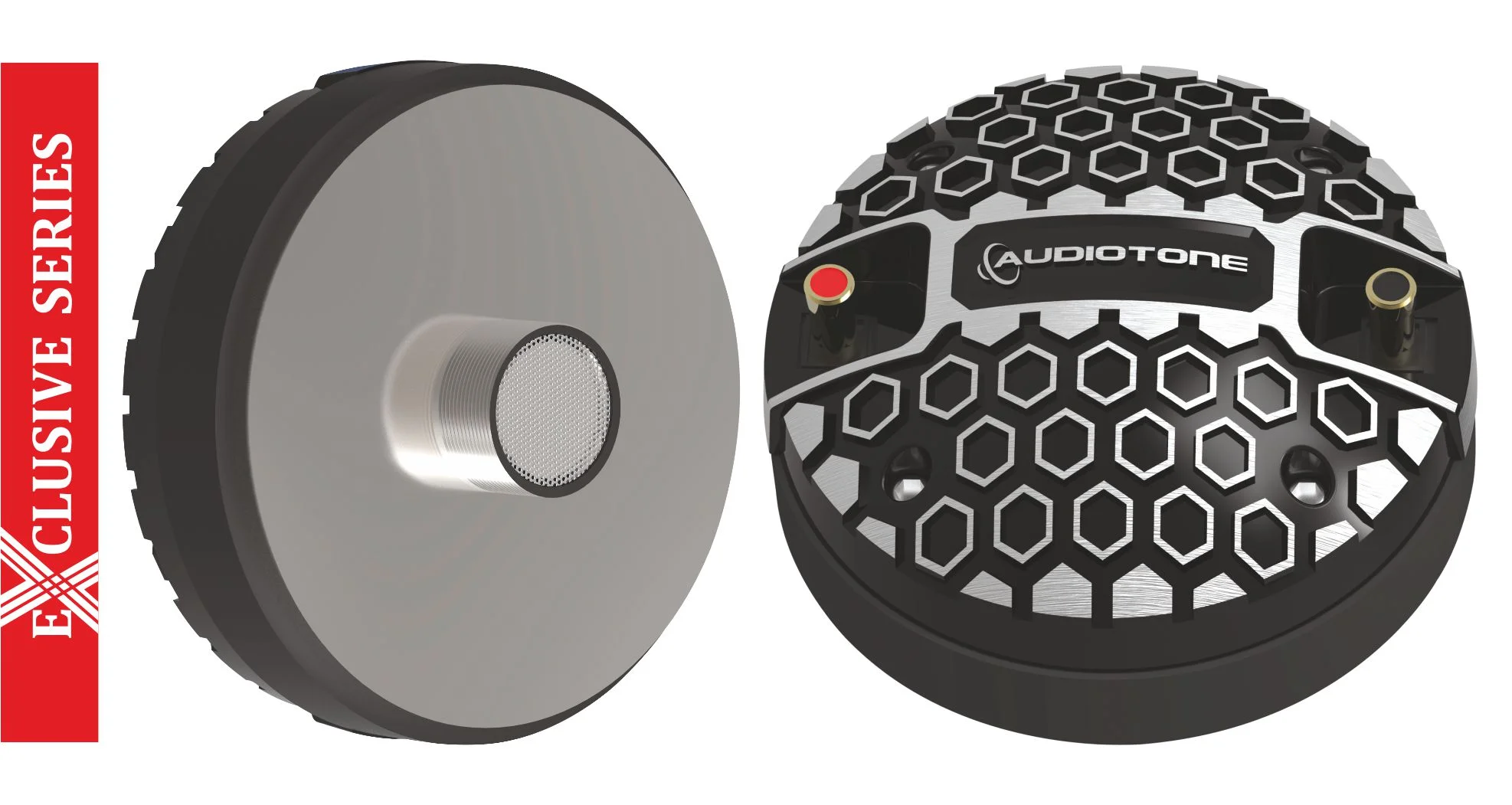
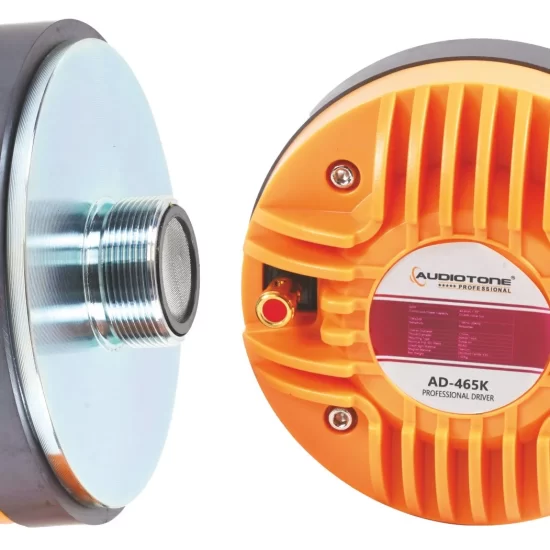
At its core, the AD-551XLS is powered by a 51.3mm (2-inch) copper-clad aluminum (CCAW) voice coil as can be seen This component offers excellent thermal conductivity and high efficiency. It ensures stable, distortion-free output even at high volume levels. The AD-551XLS supports 100W RMS power and up to 200W program power, making it ideal for demanding sound reinforcement tasks. Its 108 ± 2dB sensitivity rating delivers strong output with minimal power input—perfect for large venues and high-SPL environments.
The frequency response range of 800Hz to 16,000Hz covers a broad high-frequency spectrum. This allows the AD-551XLS to reproduce vocals, instruments, and effects with precision and accuracy.
Whether you’re pushing mids or crisp treble content, it delivers with confidence.
The AD-551XLS features a 25mm (1-inch) throat diameter and a screw-on mounting type, allowing for easy integration with various horn flares and enclosures. It has an overall diameter of 134mm and weighs 2.7 kg. This offers a stable, solid structure while keeping the weight manageable for both portable and fixed sound systems.
A major highlight of the AD-551XLS is its composite diaphragm, engineered to balance strength, responsiveness, and fatigue resistance. This material helps maintain sonic consistency over time, even in high-demand applications. Paired with a Strontium Ferrite Y35 magnet, the driver generates strong magnetic flux for enhanced sensitivity and dynamic range.
Available in 8Ω and 6.5Ω impedance options, the AD-551XLS gives system designers flexibility in configuration and amplifier matching.
FAQ Section
What physical indicator warns that the 51.3mm CCAW voice coil has experienced severe thermal clipping, and how do you diagnose it before a total burnout?
Before the driver goes completely silent from an electrical open circuit, a system under heavy amplifier clipping will output a distinct, raspy distortion that makes high-mid vocals sound thin and scratchy. When you open the magnet assembly to inspect the 2-inch coil, the primary indicator is a deep amber or blackened discoloration on the polyimide former, along with an unravelling of the wire layers.
How does a 1-inch (25mm) screw-on throat entry limit or optimize your choice of horn flares when building compact stage monitors?
The 1-inch (25mm) screw-on layout is excellent for accelerating acoustic wave velocity right at the exit of the phase plug, forcing tight control over the dispersion pattern. When constructing stage wedges, this size allows you to use small, compact asymmetric 90° x 40° or 60° x 40° horn flares that point the treble right at the artist’s ears.
Why do mobile DJ setups running outdoor summer soundchecks notice the treble becoming dull after an hour, and what is the physics behind it?
This loss of crispness is caused by thermal power compression inside the magnetic motor structure. As the driver handles continuous 100W RMS loads in high ambient temperatures, heat builds up inside the tight voice coil gap.
What mechanical advantages does a composite diaphragm offer over a pure titanium dome in 100W high-frequency drivers?
While pure titanium domes are highly rigid and project sound over long distances, they have a natural tendency to produce sharp resonance peaks and harsh modal ringing at the upper end of the frequency spectrum. A composite diaphragm design resolves this by blending structurally rigid materials with dampening agents.
When configuring a compact 2-way cabinet, how does a 108dB sensitivity rating alter your passive crossover pad design?
An efficiency rating means this high-frequency driver is far more efficient than the 12-inch or 15-inch mid-bass woofers it is typically paired with, which usually sit around 96dB to 98dB sensitivity. If you connect them to a passive crossover network without adjustments, the treble will completely overpower the bass, creating an incredibly bright and unbalanced sound.


Reviews
There are no reviews yet.