
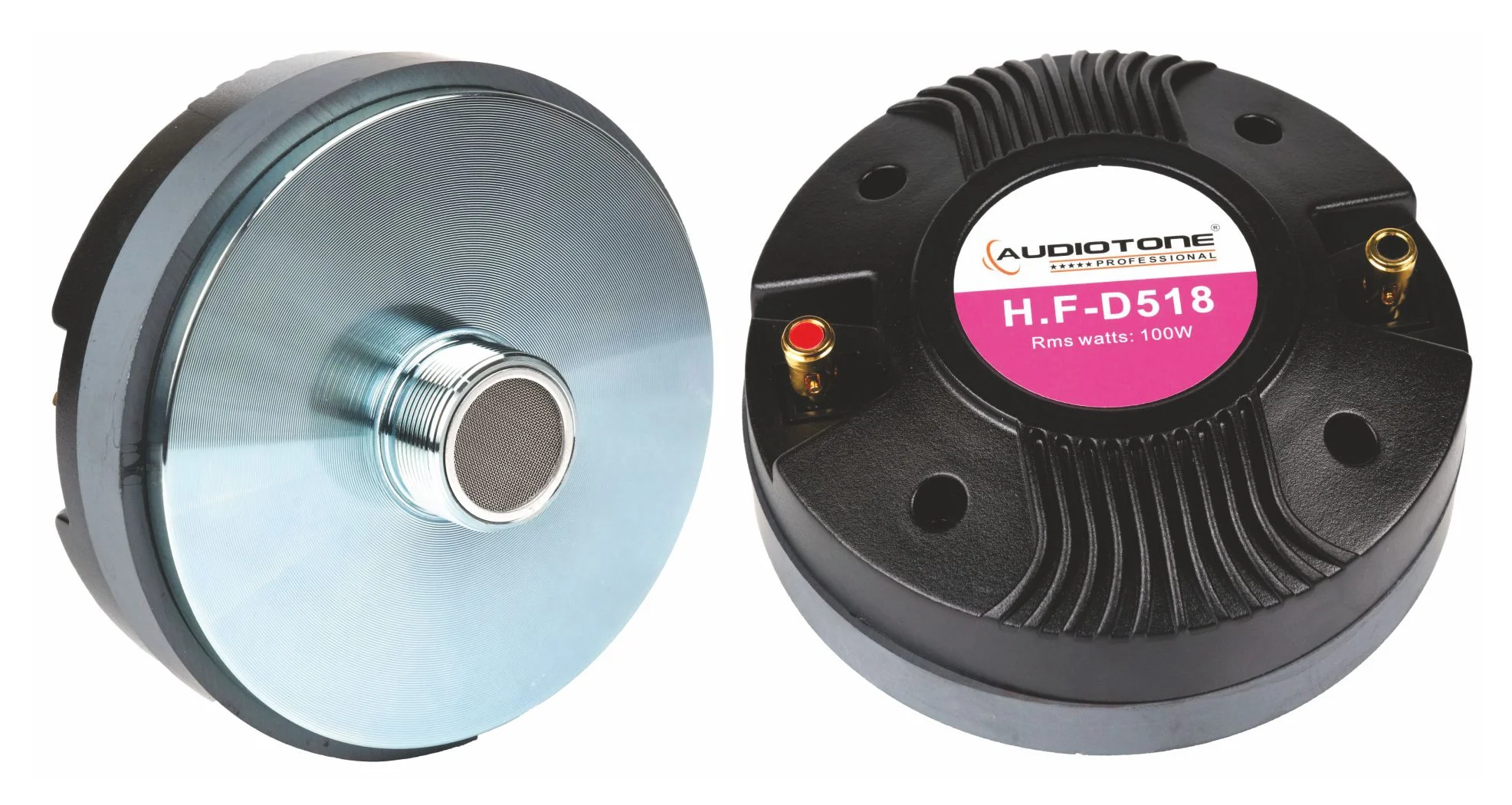
but AD-518 Compression Driver – Precision High Frequencies
The AD-518 Compression Driver – Precision High Frequencies is a precision 1-inch throat driver, built to deliver crisp and powerful high-frequency audio. It offers exceptional efficiency, clarity, and long-term durability generally Ideal for use in PA systems, line arrays, fixed installations, and stage monitors, the AD-518 performs reliably even in the most demanding environments.
At the heart of the AD-518 is a 51.3mm (2-inch) copper-clad aluminum (CCAW) voice coil. This component provides excellent thermal conductivity and high efficiency. The driver supports 80W RMS power handling and up to 160W program power, making it capable of handling intense sound pressure levels. Despite as much as its power, it maintains tonal balance and clarity. With a sensitivity of 108 ± 2dB, it delivers strong output with minimal input—perfect for professional setups that demand maximum projection.
Its frequency response of 1200Hz to 20,000Hz ensures smooth, detailed reproduction across the high-frequency spectrum. The 1-inch (25.4mm) throat diameter and screw-on mounting design offer universal compatibility with a variety of horn flares and enclosures.
The AD-518 has an overall diameter of 134mm and weighs 2.5 kg. It is built for durability while still allowing easy integration into professional audio systems.
The diaphragm is crafted from pure titanium, known for its strength, light weight, and resistance to heat and fatigue. This material choice ensures exceptional transient response and consistent sound quality over extended use. The Strontium Ferrite Y35 magnet delivers strong magnetic flux and stable performance across the full frequency range. This ensures a powerful and dynamic output. Its rugged construction and reliable performance make it an excellent choice for rental systems, touring applications, and permanent installations.
FAQ Section
What structural warning signs indicate that a screw-on compression driver has been overtightened onto a horn flare, and how does it ruin the acoustic wavefront?
When mounting a screw-on driver like the AD-518 to a metal or heavy plastic horn flare, installers often apply excessive torque thinking it secures the connection. This overtightening strips or cross-threads the precision metal threads, causing the driver chassis to sit at a slight angle relative to the horn entry throat.
Why does a pure titanium diaphragm provide sharper transient detailing for live audio tracking than composite synthetic materials?
Pure titanium is highly valued in live sound reinforcement for its incredible stiffness-to-weight ratio and resilience under thermal stress. When sharp high-frequency audio transients—like the smash of a snare drum or an acoustic string pluck hit the system, a softer composite diaphragm can flex or warp slightly across its surface.
What field failure occurs when running an 80W RMS driver without a high-frequency protection lamp or fuse circuit in a passive crossover cabinet?
In passive speaker systems, a sudden burst of microphone feedback or an overdriven audio mixer can instantly spike the voltage on the high-frequency line. Without a protection circuit—such as a fast-acting tungsten filament lamp or a solid-state fuse built into the crossover network—this excess current travels straight to the 51.3mm voice coil.
How does a 2-inch (51.3mm) voice coil size lower the risk of power compression during long, continuous outdoor summer events?
Power compression happens when prolonged high-volume playback heats up a speaker coil, driving up its electrical resistance and causing a noticeable drop in volume. Smaller 1.35-inch or 1.75-inch voice coils have limited surface area and bottle up heat quickly.
How does a 108dB sensitivity rating alter your system’s processing settings when configuring an active bi-amplified stage wedge?
An ultra-high efficiency rating means the driver produces intense sound pressure levels with very little amplifier power. When setting up a bi-amplified monitor system—where one amplifier channel powers the mid-bass woofer and another powers the compression driver—leaving the channel gains equal will cause the treble to completely pierce through and overpower the bass.



Reviews
There are no reviews yet.