
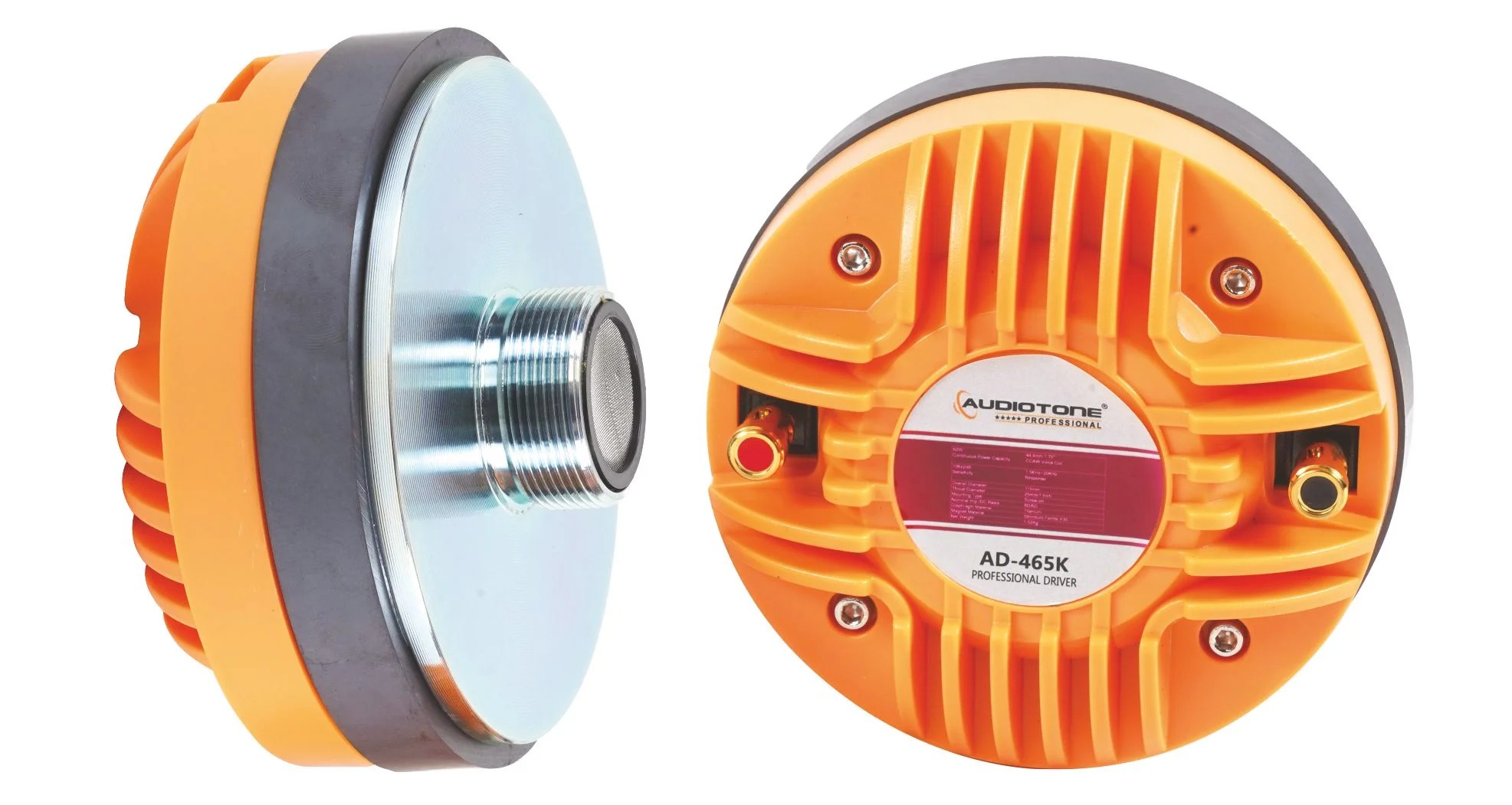
AD-465K Compression Driver – High Frequency
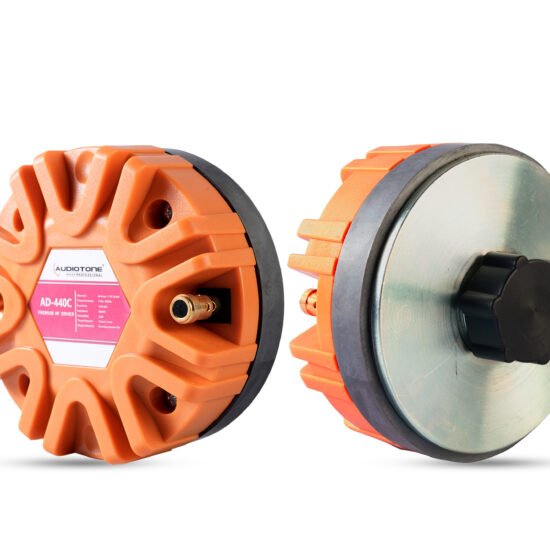
The AD-465K Compression Driver – High-Frequency is a premium 1-inch throat compression driver built to deliver exceptional high-frequency response, crystal-clear sound, and consistent performance for professional PA systems, stage monitors, and fixed installations. Compact and powerful, this driver is perfect for audio applications where clarity, definition, and efficiency are critical.
At the heart of the AD-465K is a 44.4mm (1.75″) CCAW voice coil, offering excellent thermal conductivity and lightweight performance. This design ensures long-lasting durability while maintaining a high level of output detail. With an RMS power handling of 60W and a sensitivity rating of 106 ± 2dB, this driver efficiently converts power into clean, articulate sound with minimal distortion — even during extended operation.
The frequency response of 1500Hz to 20,000Hz makes the AD-465K ideal for reproducing high-frequency content with stunning accuracy. Whether used in vocal applications, cymbals, or treble-heavy audio signals, it ensures every detail is heard with clarity and precision.
The 1-inch (25mm) throat diameter and screw-on mounting type allow for easy integration with many compatible horn flares and enclosures. The AD-465K measures 115mm in diameter and weighs just 1.52 kg. Its compact and lightweight design makes it ideal for portable systems, touring rigs, and fixed sound installations.
One of the standout features of the AD-465K is its titanium diaphragm, a material chosen for its high stiffness, excellent transient response, and resistance to heat and fatigue. This ensures reliable long-term use, even in high-output environments. The driver is available in both 8Ω and 6Ω impedance options, giving system designers flexibility in matching amplifier loads and system configurations.
Whether you’re building a new setup or upgrading your existing system, the AD-465K compression driver is a smart choice. It offers the perfect blend of power, precision, and reliability for any professional high-frequency audio application.
FAQ Section
What mechanical indicators show that a compression driver’s diaphragm has gone out of alignment within the magnetic gap, and how does this affect vocal playback?
When a high-frequency driver experiences intense physical impacts during transit or overheating from over-powering, the alignment of the 44.4mm voice coil within the tight magnetic gap can shift. Mechanically, this causes the voice coil former to rub against the metal pole pieces.
How does a 1-inch (25mm) exit throat configuration influence the horizontal and vertical pattern control of an attached line-array waveguide?
A 1-inch (25mm) exit throat is highly effective for accelerating acoustic wave velocity directly out of the driver’s phase plug. When bolted onto a specialized line-array waveguide, this 25mm opening allows the high-frequency wavefront to emerge as a tight, continuous vertical ribbon of sound. This tight exit footprint prevents the acoustic energy from scattering or expanding prematurely inside the cabinet housing.
Why does operating a compression driver near its lowest frequency limit require a steep crossover slope, and what happens to the diaphragm if a shallow slope is used?
The lower bounds of a driver’s frequency spectrum carry significantly higher mechanical energy than upper treble frequencies. To protect the delicate dome, an active or passive crossover must cut off low-end energy aggressively. If you employ a shallow 6dB or 12dB per octave slope, substantial mid-range frequencies will bleed into the driver.
What structural benefits does the high-coercivity Strontium Ferrite Y35 magnet offer when the driver is exposed to reverse electrical currents from an unstable amplifier?
When an audio amplifier malfunctions or is pushed into severe clipping, it can send dangerous DC offsets or reverse back-EMF spikes down the speaker line into the driver’s motor structure. Cheap, low-grade barium ferrite magnets can easily lose their magnetic charge when hit with these opposing electrical fields, resulting in a permanent loss of speaker volume and muddy sound.
How does a 106dB sensitivity rating alter your system limiter settings on a digital signal processor (DSP) when pairing this driver with mid-bass woofers?
Because this high-frequency driver is ultra-efficient ($106 \pm 2\text{dB}$), it requires far fewer volts to reach extreme volume levels compared to standard 12-inch or 15-inch mid-bass woofers, which typically operate around 97dB sensitivity. If you set your DSP’s brickwall limiters based solely on the woofer’s power threshold, the amplifier could easily push too much voltage to the treble channel during a sudden audio peak.



Reviews
There are no reviews yet.