
FAQ SECTION
1. What is the DDJ‑3?
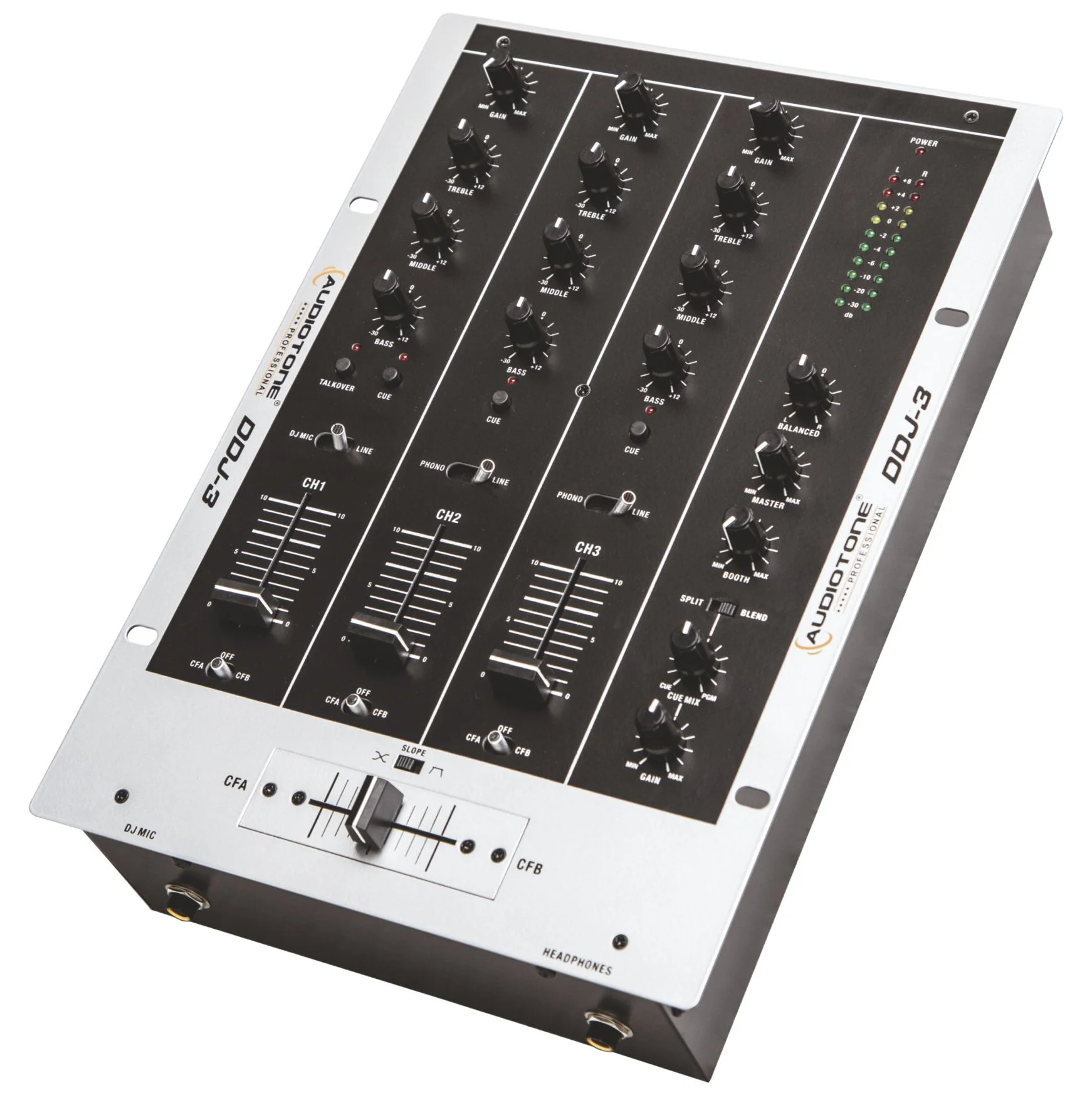
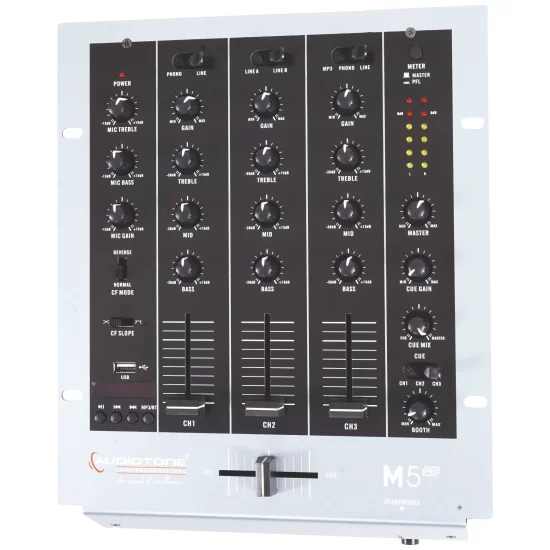
The DDJ‑3 is a 3‑channel professional DJ mixer designed for DJs who need reliable performance, smooth control, and flexible connectivity for live performances, clubs, and home studios.
2. What is a replaceable crossfader and why is it useful on the DDJ‑3?
The DDJ‑3 features a replaceable crossfader, so you can easily swap it out if it wears over time or if you prefer a different style. This ensures long-term reliability and lets DJs customize their setup without replacing the entire mixer.
3. What slope controls are available on the DDJ‑3 crossfader?
The crossfader includes both reverse and normal slope controls, allowing you to choose the direction and curve of the transition between tracks. This gives flexibility for smooth blends or sharp cuts, depending on your mixing style.
4. How many inputs does the DDJ‑3 have and what types are they?
The DDJ‑3 offers a total of 5 inputs:
-
Two switchable phono/line inputs (for turntables or line-level sources)
-
One dedicated line input (for CD players, media players, or other line-level devices)
This supports both analog (turntables) and digital (CD/media) sources.
5. Can I connect a turntable to the DDJ‑3?
Yes. The mixer has two switchable phono/line inputs, so you can connect turntables (via phono) as well as line-level sources like CD players by switching to the line setting.
6. What outputs are available on the DDJ‑3?
The DDJ‑3 provides:
-
Master output for the main mix
-
Booth output for monitor or DJ room speakers
-
Balanced XLR outputs for professional, low-noise connections
-
Unbalanced RCA outputs for standard consumer equipment
This gives versatile connection options for clubs, studios, and home setups.
7. What is the purpose of the Booth Output on the DDJ‑3?
The Booth Output is a dedicated monitor output that lets you send the mix to a separate set of speakers in the DJ booth or control room. This is essential for DJs who need to preview their mix independently from the main audience output.
8. Does each channel on the DDJ‑3 have EQ controls?
Yes. Each channel includes a three-band EQ (low, mid, high), allowing precise tone shaping for each source. This helps you balance frequencies and create cleaner, more controlled mixes.
9. Are the outputs on the DDJ‑3 balanced or unbalanced?
The DDJ‑3 provides both:
-
Balanced XLR outputs (professional, low-noise, ideal for long cable runs)
-
Unbalanced RCA outputs (standard for consumer gear)
This dual output type ensures compatibility with both professional and home audio systems.
10. What USB version does the DDJ‑3 support and how is it used?
The DDJ‑3 supports USB 2.0, enabling:
-
Direct connection to computers for DJ software
-
Digital audio playback and recording
-
MIDI control for software integration
USB 2.0 ensures high-speed, low-latency data transfer for professional DJ applications.

Reviews
There are no reviews yet.