
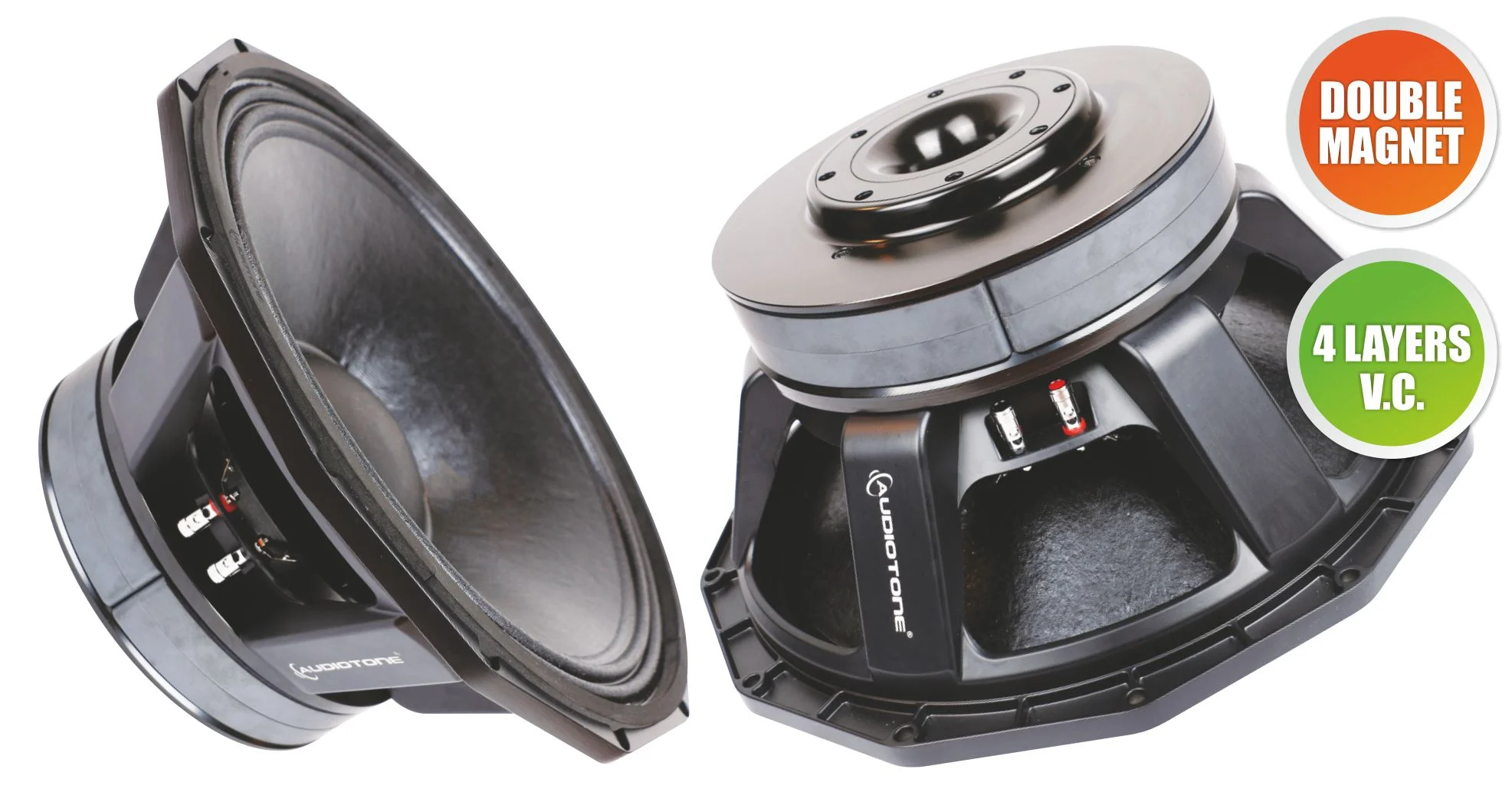

Extreme Power with the AD-1878PD AVENGER 18” Subwoofer
Designed for high-performance professional audio systems, the Extreme Power with the AD-1878PD AVENGER 18” Subwoofer is a powerhouse 18-inch subwoofer driver that delivers unmatched output, clarity, and durability. Engineered for large-scale sound reinforcement systems, this driver boasts a staggering 5600W peak power handling and 2800W RMS, making it a perfect choice for live concerts, festivals, outdoor events, and club installations where raw power and deep bass are essential.
At the core of its performance is a 135mm (5.5″) In/Out voice coil, built with advanced materials to handle extreme temperatures and maintain signal integrity even under prolonged, high-power use. Paired with a high-sensitivity rating of 97.5 ± 2dB, this driver delivers loud, detailed sound with minimal distortion—ensuring every low-frequency note hits with impact and precision.
The AD-1878PD AVENGER offers a wide frequency response range of 35Hz to 2500Hz, making it highly versatile. It delivers tight, controlled bass and smooth low-midrange performance. Use it as a dedicated subwoofer or as part of a full-range system. In both cases, its powerful and detailed sound stands out. This driver performs exceptionally well in any professional audio setup.
now that Its massive Y35 magnet structure (280×140×40 mm) generates a powerful magnetic field for increased motor strength and responsiveness. This contributes to better cone control, reduced distortion, and improved transient response—key factors in delivering punchy, musical bass.
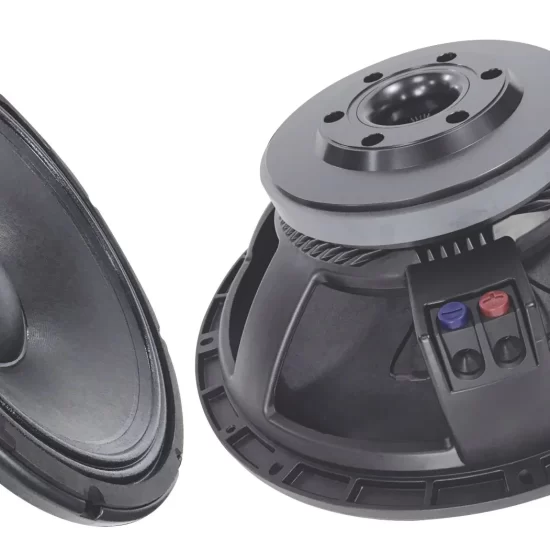
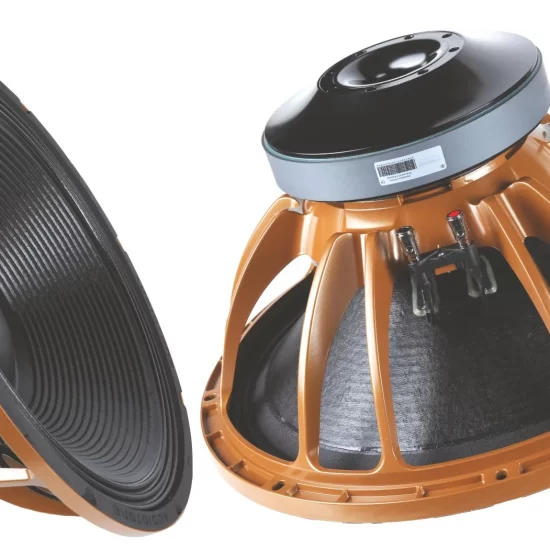
Built for reliability and durability, the AD-1878PD AVENGER features a heavy-duty aluminium basket that ensures structural integrity while reducing resonance and mechanical vibration. This rugged construction also supports better heat dissipation, increasing driver longevity in high-demand applications.
The AD-1878PD AVENGER delivers the power and reliability professionals need. It’s ideal for live sound engineers, rental companies, and system integrators alike.
FAQ Section
1. How does the arrangement of multiple 18-inch subwoofers affect the directivity of the low-end sound field?
In standard setups, a single 18-inch subwoofer radiates sub-bass omnidirectionally—meaning the sound waves spread out evenly in a giant circle all around the cabinet. However, when you line up multiple subwoofers side-by-side across the front of a stage (known as a horizontal subwoofer array), their sound waves merge to create a wide, forward-projecting beam of acoustic energy.
2. Why is tracking a speaker’s mechanical “suspension compliance” critical when deciding on long-term re-coning or servicing?
Over years of punishing, high-volume touring, the constant physical stretching of a subwoofer’s fabric spider and outer surround will naturally cause the suspension to become softer and more flexible. If a speaker is pushed far past its operational life or handles severe clipping, the cone assembly may require re-coning using an official factory kit.
3. How does the internal air volume of an enclosure change when choosing a driver with a massive magnetic motor structure?
Every raw loudspeaker component takes up physical space inside a box, which is technically referred to as the driver’s volume displacement. The Avenger features a colossal, heavy-duty dual-ferrite magnet and a thick cast aluminum chassis. When building a custom cabinet, this substantial physical mass must be calculated and added to the box dimensions.
4. What is the relationship between an amplifier’s output voltage headroom and a subwoofer’s transient response?
A high-impact sub-bass transient—like an energetic electronic drop or an explosive live kick drum hit—requires a sudden, massive burst of electrical current from the power amplifier. If your amplifier lacks sufficient output voltage headroom, it will flatten the tops of these rapid audio peaks, leading to instantaneous signal compression.
5. Why is proper chassis grounding and keeping signal cables away from speaker lines important in high-power touring racks?
Because high-power amplifiers send massive amounts of electrical current down the speaker lines to drive the 5-inch voice coil, these thick speaker cables generate powerful, localized electromagnetic fields. If thin, shielded microphone or mixer signal cables are run directly parallel to or tangled around the speaker wires, this high-voltage energy can bleed backward into the audio path, creating an annoying background hum or buzz.



Reviews
There are no reviews yet.